
#002 Revisions
Comparing revising writing to revising drawing, and giving myself practical things to do. Also some news.

Last newsletter, I idly asked why my drawings get duller and stiffer the more times I revise them, when my writing generally gets clearer and brighter with each revision. Now I want to answer that question (which suddenly seems huge) and give myself some practical things to do based on my answers. Here goes:
Answer (1): It’s just me
Last time, Sam Jones commented that she was able to get through the ‘ick’ of revising a drawing. And I have shelves of picture books that prove there are illustrators who can make finished work without adding dullness and stiffness. So the problem might lie in how I go about revising drawings.
(a) skill
It could be, for example, that I just know more about revising writing than revising drawing. With a previous job that broke down as roughly 35% reading, 35% writing, 20% admin, 10% speaking and 0% drawing, I’m just more practised at writing than drawing.1
Practical thing to do: Practice! Draw more, and do more finished illustrations (vs quick sketches).
(b) approach
Maybe it’s not just the kind of general, intuitive, skills that come with practice, it’s my specific approach.
Checklists
When I’m revising writing, I have a long mental checklist of things to delete/add/amend.2 When I’m revising a drawing to make it into an illustration, I’m vaguely hoping to improve the composition, make a character look more like they did on a previous page, or fix obvious splotches, smudges and wobbles. I don’t have a checklist.
Tricks
Not only do I not have a checklist, I don’t have a broader approach for moving from rough to final. The topic of keeping freshness in a final illustration could fill a whole series of newsletters, but here are a couple of approaches that have stuck with me:
Helen Stephens says she doesn’t redraw the whole thing; she digitally patches in hand-drawn additions or corrections.
Laura Carlin has said she makes lots of drawings at once so that she doesn’t get hung up on any particular one of them being the final image. I tried this out recently making an illustration for George MacDonald’s story, The Light Princess. That involved an enjoyable afternoon drawing many, many babies floating out of a castle by a lake. But at the end of the afternoon, I wished I’d experimented more with the castles, the lakes and the babies. There wasn’t a whole lot to choose between them.
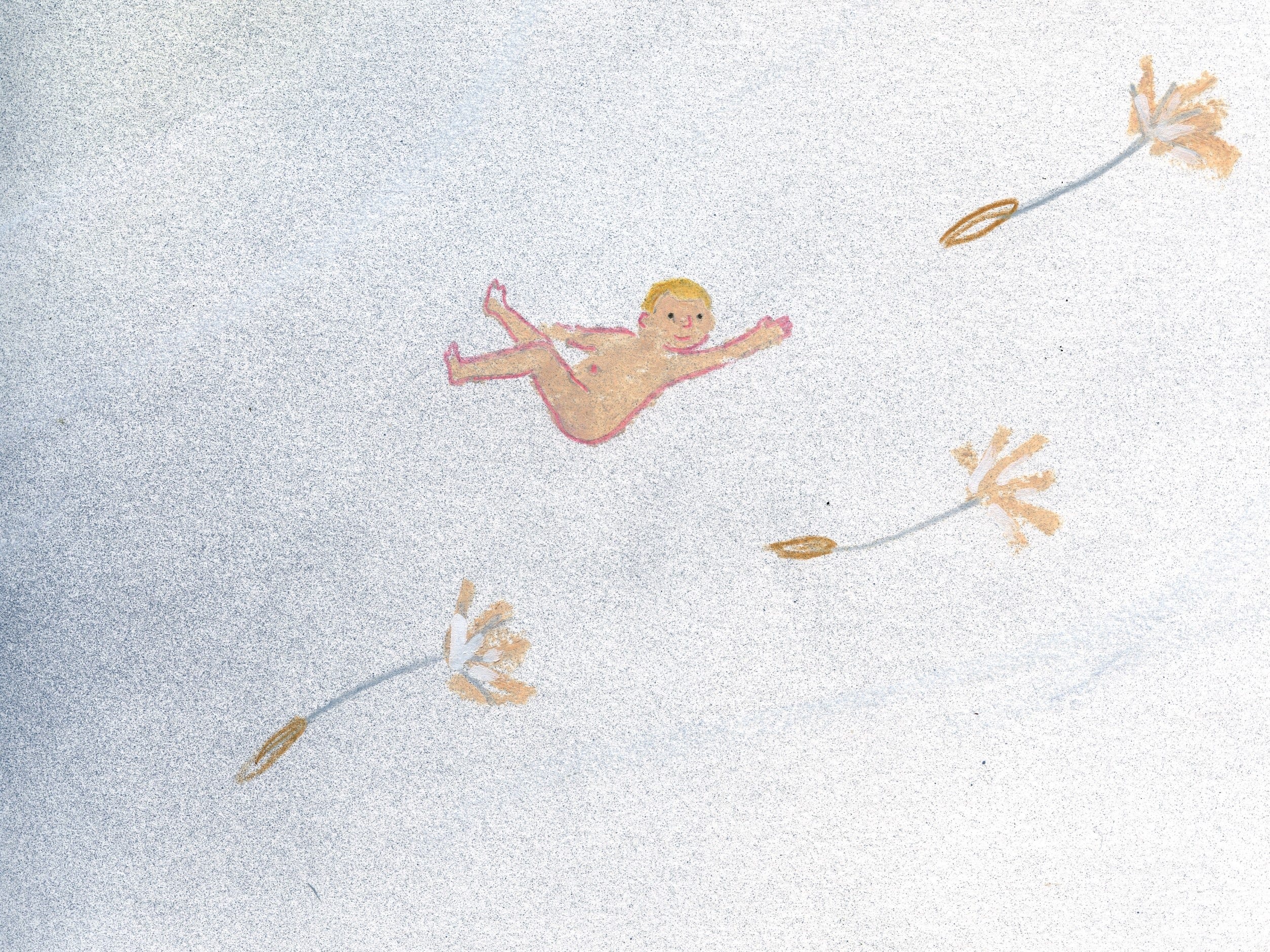
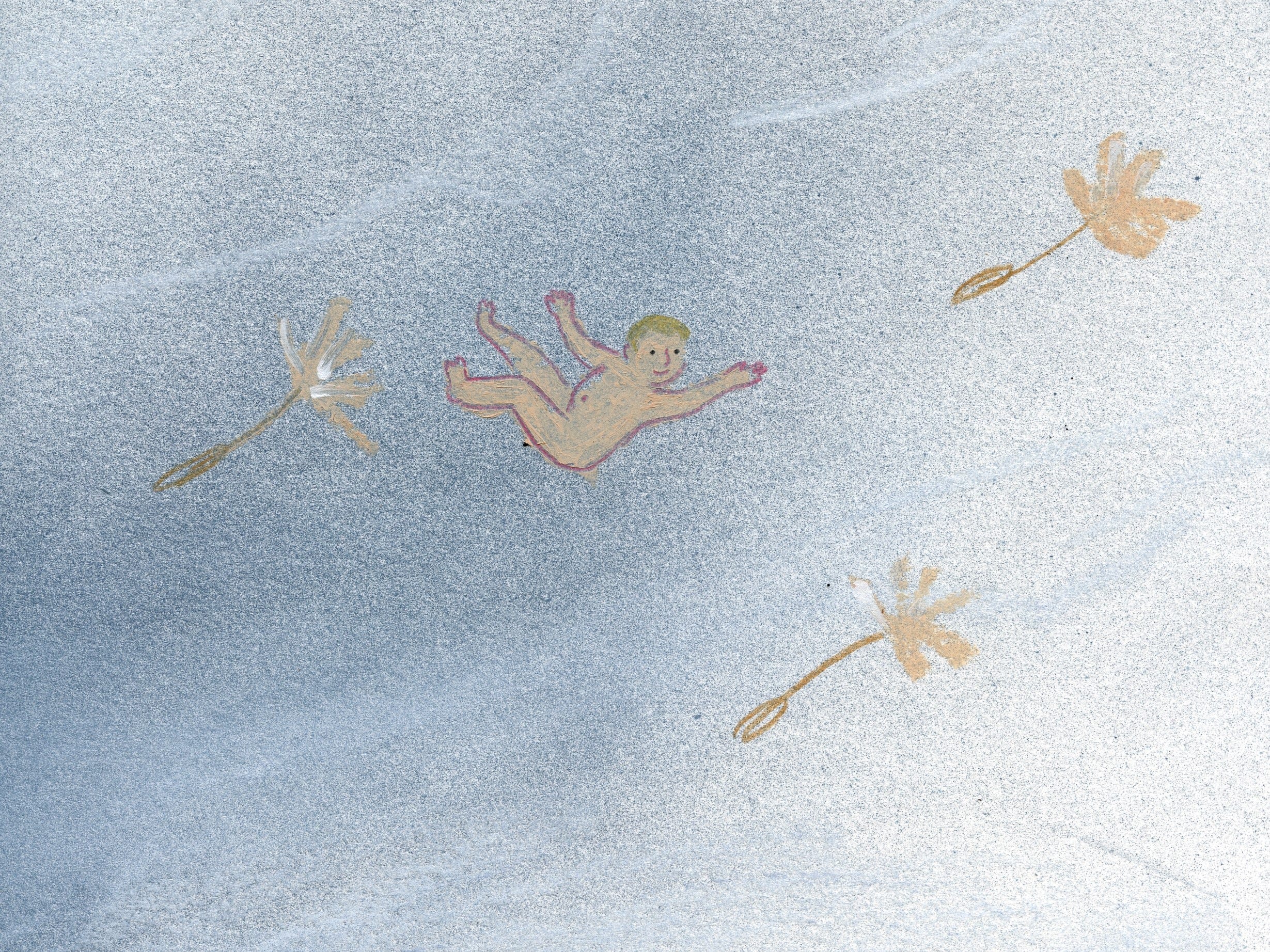
Practical things to do: Think about what a drawing revision checklist might include. Find out other tricks to keeping the life in a final drawing (please comment!) and try them out.
Answer (2): ‘Freshness’ comes in different ways in writing and in drawing
I don’t genuinely think it’s all about my skills or approach. I think that the idea that writing can get fresher when revised - when drawing often gets staler - can tell us something about what freshness and staleness look like in writing and drawing, and how to revise with that in mind. Here’s one framing:
Freshness and Revsions in Writing
Fresh writing uses new imagery, is specific, and says things that are rarely said, or maybe even things that have never been said before. Stale writing coasts along on cliche, general statements, and surface-level observations. Stale writing is often what you get when you first write something, because the cliches and the lazy vagueness and just generally everything that’s obvious is - obviously - obvious. It’s what the mind reaches for first.3 So, naturally, revisions - where you examine what you’ve written and make it work harder, where you strip out the obvious, the easy and the lazy - often make writing fresher.
Freshness and Revisions in Drawing
On the other hand, to me, fresh drawing is drawing where you can see the influence of the the maker; the trace of their hand on the page. There’s something spontaneous about it. It might be a bit wobbly, wonky, lumpy or skew-whiff. When you revise it to make it ‘better’ - to tidy it up - some of that good stuff gets lost. You end up with a staler version.
Getting in My Own Way
If, by trying to make a drawing better, I’m actually making it worse (or stiffer, or staler), then I’m clearly getting in my own way. I need to be looser in my final drawings, and that’s what the ‘tricks’ discussed above are aiming at. But what if I don’t want to do a ‘trick’? What if I want to do a single, loose and spontaneous, final drawing?
Time and Effort
Ha! I don’t think it works like that. At least not for me. I think with my writing I can happily delete, rearrange, cut, paste and start again, knowing that everything I do is undoable, because everything is saved. When I’m drawing, any small mistake can ruin the whole thing, then I have to start again, only this time I’m extra-vigilant against mistakes. I draw more slowly. My lines are less wobbly and more painstaking. It’s just too much time and effort to have to start again again.
Photoshop
If I could fix the oil pastel smudge that gives the flying baby a weird bum-lump, then I wouldn’t have to start again. And obviously there’s software out there which would allow me to do this. Because of the things that I value in a drawing, I’m often not a big fan of drawings that look like they’ve been entirely produced on a computer. And I’m basically reluctant to do things that I expect will be time-consuming and boring. But, I think the time has come for me to learn how to edit drawings using image-editing software.
I don’t expect this to fix everything, and maybe by giving myself a tool that I can use to tidy up my drawings, I’ll go too far and make things worse. But it’s worth a try.
Practical thing to do: Learn more about putting things together digitally, and experiment.
Answer (3): Writing and drawing are just different, OK? You can’t always expect to be able to make neat analogies between them
I think this is a definite possibility, and I’m probably going to keep knocking up against it as I carry on exploring similarities and differences in the creative practices of drawing and writing. However, if I were reading this newsletter, I’d be getting bored by now, so I’ll leave it at that.
Practical thing to do: Quickly get the ‘News’ section done, and then stop typing.
News
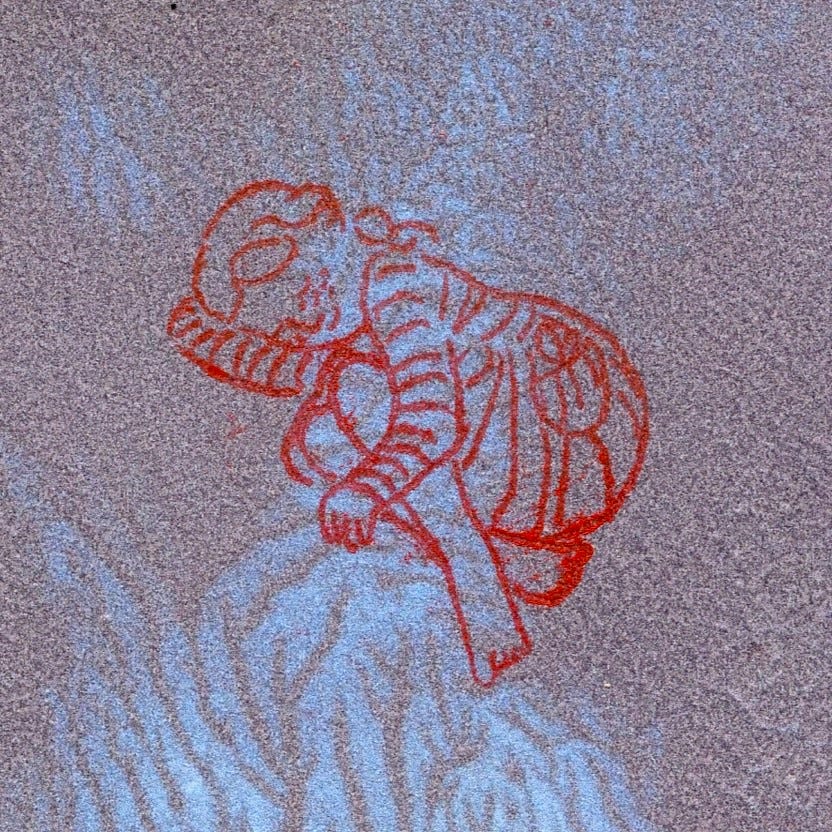
I’m into the last few days of putting together an installation for Gallery 495. The gallery is a phone box that hosts exhibitions with a communication or environmental theme. I’ll be looking at communication through story, with a folktale that will unfold night by night with a new illustrated pane, and the phone box glowing like a lantern. The community library box beside the gallery will have collections of folktales for borrowing, and new pages of my story with every new illustrated pane. Here’s one of the characters:
Community
I loved reading your responses to my last newsletter - and they were super-helpful in preparing this one! Do you have a checklist for revising an image? What’s your favoured approach for keeping freshness? Please keep commenting.
Patent attorney readers, feel free to weigh in on this characterisation of the job.
And I’ll try to write out this mental checklist in a future newsletter. Can you tell I love footnotes?
I think the kind of writing you do when you freewrite is an exception, and I’ll get to this in another post.
This is so interesting, Holly! I find making a “finished” piece of art very difficult because I love the freshness of the unfinished piece, the beauty of the marks that build up to make a work of art.
Whereas writing may be a tearing down and drawing/painting a building up, the common ground between the two is that they are both explorations. They both start from the same place on the map of wonder. When I think of this, I think about how Lewis Carroll did not have a word processor. The most elaborate tool he had may have been a fountain pen. The typewriter was as yet uninvented. Imagine his revisions.
My father was an animator whose work spanned the inception of the medium until the advent of computer animation. I remember watching him when he was still doing everything by hand, preparing to lay down a final highlight on a painting of a spacecraft. He used an airbrush for this. He made at least three or four passes with the instrument before the releasing the final zzzzt of paint. It was perfect. He had been practicing his entire life. It still amazes me and I can’t come anywhere close.
I really love your art and your imagination. I discovered your work on instagram this summer during 3materials and really loved your ability to convey atmosphere by leaving a lot “unsaid”. I hope you can allow your drawing to take shape naturally, come into focus as your skills increase. Your voice is authentic and that is priceless.
I can very much relate to a lot of points you made! I've been thinking more and more about collaging – if the final illustration consists of more than just one part (for instance a foreground and a separate background), it might be easier to make changes... Sometimes I've also considered cutting out the parts I don't like and keeping the bits I do like. Isn't revising a text sort of like that, cutting and pasting, collaging?